Wonderful Willow Font
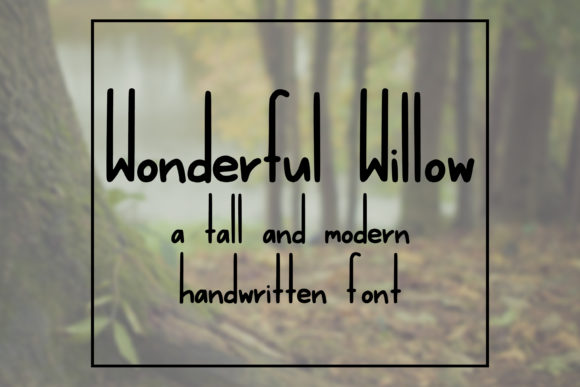
The Wonderful Willow font is a tall and skinny typeface that brings a modern, sleek aesthetic to digital design. As a sans serif font, it offers clean lines and a minimalist feel that works well in a variety of web and UI contexts. Its unique shape makes it ideal for creating visual interest without overwhelming the user experience.
Web designers and digital creators often look for fonts that can enhance readability while maintaining a strong visual presence. Wonderful Willow fits this need perfectly. Its slender structure allows it to stand out in headers and titles, making it an excellent choice for hero sections, call-to-action buttons, and branding elements. The font’s personality is both professional and creative, making it suitable for a wide range of industries and applications.
Using Wonderful Willow in Web Design
When used in website headers, Wonderful Willow adds a sense of elegance and clarity. Its vertical proportions help draw attention to key messages without disrupting the overall layout. For landing pages, this font can be used to highlight primary content, such as headlines or subheadings, ensuring that users quickly grasp the main purpose of the page.
In online stores, Wonderful Willow can be applied to banners and product titles to create a cohesive brand identity. Its slim form pairs well with bold colors and contrasting backgrounds, making it a great option for eye-catching designs. When paired with a simpler sans serif font for body text, it helps establish a clear visual hierarchy, guiding users through the content with ease.
Enhancing Visual Hierarchy and Brand Tone
Visual hierarchy is essential for effective web design, and Wonderful Willow supports this by offering a distinct yet readable appearance. Its tall, narrow structure allows it to occupy less horizontal space, which is especially useful for mobile layouts where screen real estate is limited. This makes it ideal for small buttons, navigation menus, and other compact UI elements.
The font’s modern tone aligns well with brands that want to project professionalism and innovation. It’s particularly effective for tech startups, creative agencies, and digital product launches. By using Wonderful Willow in logos, headings, and promotional graphics, designers can reinforce a brand’s identity and build trust with their audience.
Best Applications for Wonderful Willow
Wonderful Willow excels in display roles rather than as a body font. It’s best suited for short phrases, headings, and decorative accents that require a strong visual impact. For example, on a creative portfolio site, it can be used to showcase project titles or client names in a way that feels both stylish and legible.
On a coaching website, Wonderful Willow can be used in hero sections to emphasize key services or offerings. Its ability to command attention makes it perfect for CTA buttons, such as “Start Your Journey” or “Join Now.” In course sales pages, it helps create a sense of urgency and clarity, guiding users toward conversion points with minimal effort.
Readability Considerations
While Wonderful Willow is visually striking, its thin strokes require careful use to maintain readability. On mobile screens, it’s important to ensure sufficient contrast and spacing between letters. Using it on dark backgrounds may require adjusting the font size or weight to prevent it from appearing too faint.
For image overlays, pairing Wonderful Willow with a solid color background or subtle gradient can help it stand out without causing visual strain. In responsive layouts, testing the font at different screen sizes ensures that it remains legible across all devices. Small buttons and icons benefit from a slightly larger size or bolder weight to maintain visibility.
Font Pairing and Design Integration
When working with Wonderful Willow, consider pairing it with a complementary font to balance its style. A simple sans serif font like Arial or Helvetica can serve as a reliable base for body text, allowing Wonderful Willow to shine in display roles. This combination creates a clean, professional look that works well for corporate websites and editorial designs.
For a more editorial feel, pairing Wonderful Willow with a serif font like Georgia or Times New Roman can add depth and sophistication. This approach is ideal for blog headers, magazine-style layouts, and content-focused websites. The contrast between the two fonts enhances readability while maintaining a cohesive visual theme.
Commercial Licensing and File Formats
Before using Wonderful Willow in commercial projects, check the licensing terms to ensure compliance. Most fonts come with specific rights for web use, print, and digital assets. For websites and online stores, a webfont license is typically required to embed the font in CSS files.
Ensure that the font includes multiple weights and styles, such as regular, bold, and italic, to provide flexibility in design. File formats like WOFF and WOFF2 are preferred for web use due to their efficiency and compatibility. If the font supports multilingual characters, it can be a valuable asset for global brands or international audiences.
Applying Wonderful Willow in Digital Projects
For a boutique online store, Wonderful Willow can be used in product titles and promotional banners to create a premium feel. Its slim form complements modern, minimalist aesthetics and helps differentiate the brand from competitors. On a blog header, it adds a touch of elegance while maintaining clarity and readability.
In a digital brand kit, Wonderful Willow can be used consistently across all touchpoints, from social media graphics to email templates. This consistency reinforces brand recognition and builds a stronger connection with the audience. Whether designing for a SaaS platform or a creative agency, the font’s versatility makes it a valuable addition to any design toolkit.